What is Solitaire?
Solitaire, also called Klondike, is a card game for one player. You sort a shuffled deck into four piles, one for each suit, in order from Ace to King. It's the game most people mean when they say "solitaire", and the one that came with Windows. In Britain it's often just called Patience.
How to play Solitaire, step by step
- Shuffle a standard 52-card deck, with the jokers taken out.
- Deal 28 cards into seven columns of 1 to 7 cards. Only the top card of each column is face up.
- Put the other 24 cards face down above the columns. This is the stock.
- Move cards between columns, building down in alternating colours: a red 6 on a black 7.
- Move Aces up to the four foundations, and build each one up by suit, from Ace to King.
- When you're stuck, turn cards from the stock, one or three at a time, and play them if you can.
- You win when all 52 cards are on the foundations.
Watch how to play Solitaire
See a game set up from start to finish: the shuffle, the deal into seven columns, the stock, and the first moves. Pause it any time, or follow the step-by-step pictures further down.
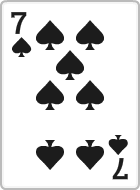
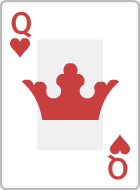
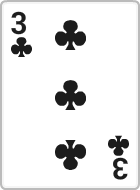
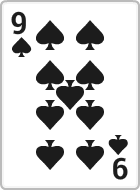
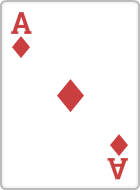
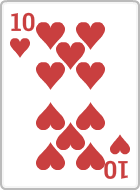
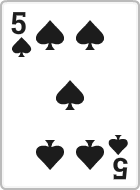
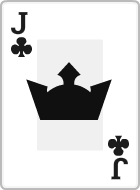
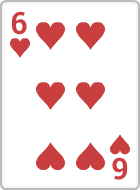
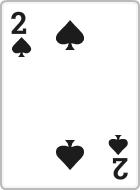
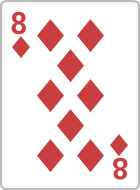
What you need
How to set up Solitaire
Before you deal, picture the four parts of the table. Each one has its own colour in the pictures below.
1Leave room for every pile
- Stock (top left): the cards you don't deal, face down.
- Waste (beside it): where cards from the stock are turned face up.
- Foundations (top right): four spaces, one per suit, each built from Ace up to King. They start empty.
- Tableau (below): seven columns, numbered 1 to 7 from the left.
How to deal Solitaire
1234567just dealt or moved
2Deal the first row
From left to right, deal one card to each column. Only the first card, on column 1, goes face up. Column 1 is now finished.
123456just dealt or moved
3Deal the second row, starting on column 2
Skip column 1. Deal face up onto column 2, then one face-down card on each of columns 3 to 7. Each card overlaps the one under it, so you can still see how many are in the column.
4Keep going until column 7 has seven cards
Each row starts one column further right, with its first card face up. After the seventh row, the last card face up on column 7, the tableau holds 28 cards and every column has exactly one face-up card on top.
24just dealt or moved
5Put the rest of the deck down as the stock
Square up the 24 cards you have left and put them face down at the top left. Don't look at them. You're ready to play. Before you start, move any Ace that's already face up (like the A♦ here) to a foundation.
Klondike Solitaire rules
The goal is to move all 52 cards to the four foundations, each one a single suit from Ace up to King. These are the rules once the cards are dealt.
- Build down in alternating colours in the tableau: a red 6 on a black 7, a black 5 on a red 6.
- Move runs together. A face-up run that's in order (say 9♣ 8♥ 7♠) can move onto a red 10 as one group.
- Turn up uncovered cards. When you move the last face-up card off a column, flip the face-down card under it. This is how the hidden cards come into play.
- Only a King fills an empty column, or a run that starts with a King.
- Build the foundations up by suit: the A♦, then the 2♦, 3♦ and so on. Any Ace can start an empty foundation.
- When you run out of moves, turn cards from the stock onto the waste. The top waste card can go to the tableau or a foundation.
- When the stock is empty, turn the whole waste pile over, without shuffling, and it becomes the stock again.
21just dealt or moved
6The first few moves
- The A♦ goes up to a foundation, and the card under it is turned over: the 9♠.
- Three cards from the stock show the 6♥ on top. The red 6 goes on the black 7♠ in column 1.
- Now the 2♠ is on top of the waste, waiting for a red 3 or the A♠.
Draw 1 or Draw 3: the two ways to turn the stock
Agree which one you're playing before you start. It changes how hard the game is more than anything else.
Draw 1 (easier)
Turn the top card of the stock face up onto the waste, one card at a time. You get to see every card on every pass, so most deals can be won.
23One card at a time
Draw 3 (the classic)
Take the top three cards together and turn them over as one packet, so their order flips. Spread them a little: only the top card can be played. Play it, and the one under it becomes free.
21Three cards, only the top one plays
In Draw 3 the cards you can reach change on every pass, because each card you play from the waste shifts the groups of three. If fewer than three cards are left in the stock, turn over whatever is there.
House rules people play
- Passes through the stock: unlimited is the friendly rule. The strict rule is one pass in Draw 1 and three in Draw 3.
- Vegas scoring: you "pay" 52 points to deal and win 5 for every card you get onto a foundation, with the strict pass limits above. Get 11 or more cards home and you're ahead.
- Taking cards back off a foundation: some players allow moving a foundation's top card back to the tableau when they need somewhere to put a card. Agree on it first.
- Thoughtful Solitaire: deal every tableau card face up. You can see everything, so it becomes a puzzle you solve by planning rather than luck.
How you win, and when you're stuck
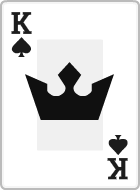
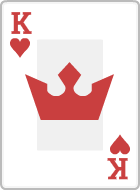
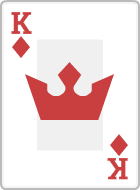
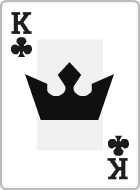
7A won game
You win when all 52 cards are on the foundations, a King on top of each. If you've gone through the stock and nothing can move, the game is lost: shuffle and deal again. Not every deal can be won, especially in Draw 3.
Tips for beginners
- Turn over face-down cards first. When you have a choice, pick the move that uncovers a card, especially in the longer columns on the right.
- Play Aces and 2s to the foundations straight away. They're no use anywhere else.
- Don't empty a column without a King to fill it. An empty column only takes a King, so it does nothing until one turns up.
- Start with Draw 1 and unlimited passes. Move up to Draw 3 once you win most games.
For more, read our Solitaire strategy guide.
Common mistakes
- Turning the wrong cards face up. Only the first card of each row goes face up, so each column has exactly one face-up card when you finish.
- Shuffling the waste before turning it back over. Keep it in order; that's part of the game.
- Turning Draw 3 cards one at a time. Flip the three as one packet, or you change which card ends up on top.
- Forgetting to flip an uncovered card. When a face-down card is left on top of a column, turn it over straight away.
No time to shuffle? Play Solitaire online, free and with unlimited undo.
Solitaire questions
How many cards do you deal in Solitaire?
28. The seven tableau columns hold 1, 2, 3, 4, 5, 6 and 7 cards, which adds up to 28. The other 24 cards of the 52-card deck go face down into the stock.
Do you deal Solitaire in rows or one column at a time?
The traditional way is in rows: one card to each of the seven columns, then one to each of the last six, and so on, with the first card of each row face up. Dealing one whole column at a time gives the same game if the deck is well shuffled, but dealing in rows spreads out any clumps a quick shuffle leaves behind.
Which cards are face up when you set up Solitaire?
Only the top card of each tableau column, so seven cards in all. Everything else, the 21 cards under them and the 24 in the stock, starts face down.
Can you play Solitaire with jokers?
No. Take the jokers and any spare cards such as rule cards out of the box first. Solitaire uses exactly 52 cards, and a joker has nowhere to go.
How many times can you go through the stock?
Under the friendly rule, as many times as you like. Stricter rules allow one pass in Draw 1 and three passes in Draw 3. Whichever you choose, decide before you start.
What can go in an empty column?
Only a King, or a run of face-up cards that starts with a King. Any other card has to wait.
How much table space do I need?
About seven card widths with small gaps, roughly 60 cm or two feet across, and enough room below the columns for them to grow. The longest column can reach 19 cards: six face-down cards plus a full run from King down to Ace.