What is FreeCell?
FreeCell is a solitaire card game for one player. Every card is dealt face up, and you get four free cells, spaces that each hold one card while you work. The goal is to sort the deck onto four foundations by suit, from Ace to King. With nothing hidden, almost every deal can be won, so it's a game of planning more than luck.
How to play FreeCell, step by step
- Shuffle a standard 52-card deck, with the jokers taken out.
- Deal every card face up into eight columns, row by row: four columns of seven, four of six.
- Leave room above for four free cells on the left and four foundations on the right.
- Move cards between columns, building down in alternating colours: a red 6 on a black 7.
- Park any single card in an empty free cell, and play it back out later.
- Move Aces to the foundations and build each one up by suit, from Ace to King.
- You win when all 52 cards are on the foundations.
Watch how to play FreeCell
See a game set up from start to finish: the shuffle, the whole deck dealt face up, and the first moves using a free cell. Pause it any time, or follow the pictures step by step below.




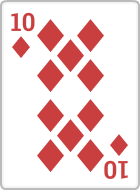
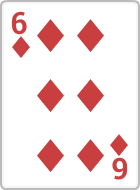

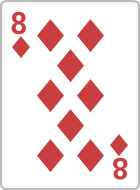
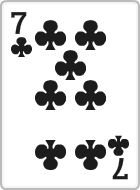






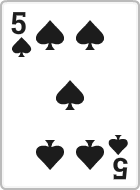
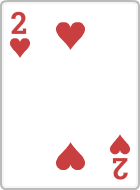
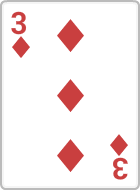
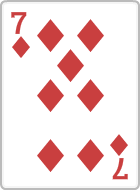



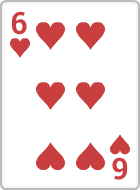
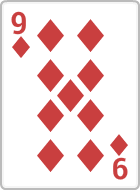
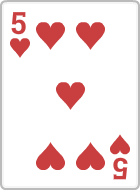
What you need
How to set up FreeCell
Before you deal, picture the three parts of the table. Each has its own colour in the pictures below.
1Leave room for every pile
- Free cells (top left): four spaces, each for one card at a time.
- Foundations (top right): four spaces, one per suit, built from Ace up to King.
- Tableau (below): eight columns, numbered 1 to 8 from the left.
How to deal FreeCell
12345678just dealt or moved
2Deal the first row, face up
Deal left to right, one card face up on each of the eight columns. Every card in FreeCell goes face up.
1234just dealt or moved
3Keep dealing rows until the deck runs out
Each row overlaps the one before, so you can read every card. Six full rows use 48 cards, and the last four land on columns 1 to 4. That's why those four columns have seven cards and the rest have six.
FreeCell Solitaire rules
The goal is to move all 52 cards to the four foundations, each one a single suit from Ace up to King. These are the rules once the cards are dealt.
- Build down in alternating colours in the tableau: a black 6 on a red 7.
- Move one card at a time. Only the top card of a column can move.
- Use the free cells. Any single card can go into an empty free cell, and it can be played back to a column or a foundation whenever it fits.
- Empty columns take any card. Unlike Solitaire, it doesn't have to be a King.
- Build the foundations up by suit, starting with the Aces.
just dealt or moved
4The first few moves
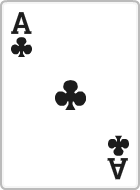
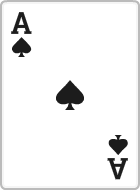
- The A♣ (column 6) and the A♠ (column 8) are on top, so they go straight to the foundations.
- The 2♣ is under the 9♦ in column 3. Park the 9♦ in a free cell, then play the 2♣ onto the A♣.
- The 9♦ waits in its cell until a black 10 comes free.
Moving several cards at once
Officially you only ever move one card. But moving an ordered group card by card through the free cells is tedious, so most players allow a shortcut: move the whole group in one go, as long as there's room to do it one card at a time. The number of cards you can move is:
(empty free cells + 1) × 2 for every empty column
With 3 empty free cells and no empty columns, that's 4 cards. Add one empty column and it's 8. (Moving into an empty column, don't count that column.)
Variations of FreeCell
Fewer free cells
Play with three, two or even one free cell for a harder game. Fewer deals can be won, and every cell becomes precious.
Baker's Game
FreeCell's older parent: you build down in the same suit instead of alternating colours. Much harder.
How you win, and when you're stuck
You win when all 52 cards are on the foundations. If every free cell is full and nothing can move, the game is lost. Since nearly every deal can be won, it's worth dealing the same cards out again and trying another plan.
Tips for beginners
- Look before you move. Every card is face up, so find where the Aces and 2s are buried first.
- Keep a free cell empty whenever you can. Full cells leave you stuck.
- Empty a column when you get the chance. It's worth more than a free cell, because it doubles how many cards you can move.
- Don't park a card with nowhere to go, like a King when no column is close to empty.
For more, read our FreeCell strategy guide.
Common mistakes
- Dealing some cards face down. In FreeCell every card is face up.
- Putting two cards in one free cell. Each cell holds exactly one.
- Building in the same colour. In the columns, colours must alternate: red on black, black on red.
- Moving a group bigger than the free space allows. Check it with the formula above.
No time to deal? Play FreeCell online, free and with unlimited undo.
FreeCell questions
How many cards are in each column in FreeCell?
The first four columns get seven cards and the other four get six, which uses all 52. Every card is dealt face up.
What do you use for the free cells with real cards?
Just four empty spaces on the table, above the left-hand columns, each big enough for one card. Leave room for four more on the right for the foundations.
Can you move more than one card at a time in FreeCell?
Strictly, you move one card at a time. Most players allow a shortcut: move an ordered group in one go, as long as you could have moved it card by card using the free cells and empty columns. With empty free cells and no empty columns, that's one more card than you have empty free cells.
Can you take a card back off a foundation?
Not under the standard rules. Once a card is on a foundation it stays there, though some players allow it as a house rule.
Can every FreeCell deal be won?
Almost every one. Because all the cards are face up, nearly every deal can be solved with careful play. Microsoft's famous 32,000 numbered deals had just one that can't be won.
Does FreeCell use jokers?
No. FreeCell uses exactly one standard deck of 52 cards, so take the jokers out first.